

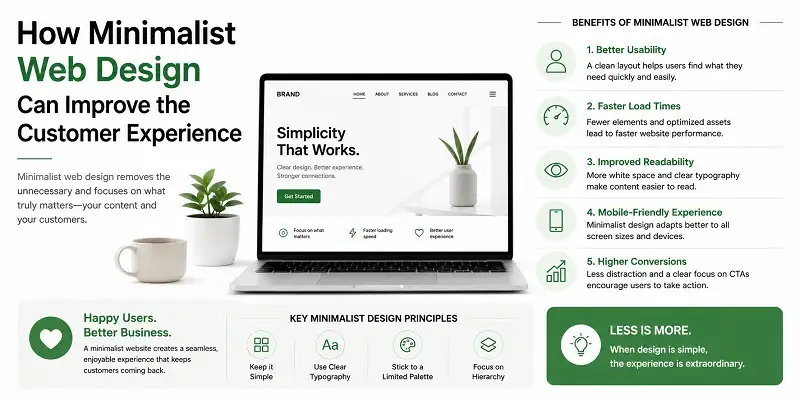
We’ve all probably heard of minimalism many times. Minimalist art, music, design, and architecture all share a common goal. This approach promotes simplicity and creates valuable results across many areas of life. Minimalism is a popular design philosophy today. It focuses on a ‘gracefully simplified’ approach. The main idea is “less is more.” This method aims to share a message simply, clearly, and meaningfully. A good website has a minimalist web design. It allows for smooth and easy navigation. It also includes features that help users complete tasks effortlessly while being interactive.
The term is closely related to the field of UX design. People visit websites for various reasons. That’s why a website’s experience matters a lot. A good website isn’t about looks. It should help users complete their goals easily. It also needs to make their experience enjoyable.
Every web development company or top design studio must know this. It applies to those offering Magento web development services or any web apps. Minimalist design is very popular right now. So, it’s key to know what it means for web design.
What Does a Minimalist Web Design Imply?
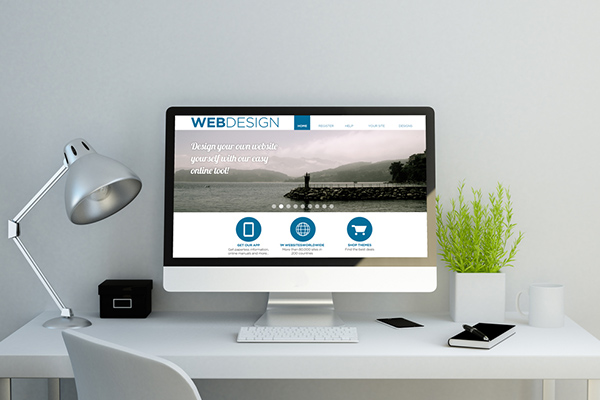
We see many websites every day. Some have stunning designs that stick with us. Others help us reach our goals more easily. Minimalist web design offers key features that enhance the customer experience. It focuses on value, not visual appeal. It uses color and design elements wisely. This creates simple, elegant interfaces. The clickable elements make navigation easy. It avoids any clutter that does not add value to the user’s experience. Moreover, it also maintains a consistent design structure.
How does it improve customer experience?
Minimalist design aims to create a simple and friendly experience for users. This boosts customer engagement and helps the business grow through the website. Let’s explore how minimalist web design enhances the customer experience.
Delivers Clarity
Have you ever visited a website that looks great but is hard to navigate? You might struggle to find the buttons you need to take action. This hurts the customer experience. It can also lead to losing potential customers, even if the product or service is great. HubSpot’s research shows that many website users value easy navigation highly.
Organizations like to use the best themes for clean, user-friendly websites. They want to do this without needing to write any code. There are many themes out there. For free templates, style settings, and modules in one place, choose HubSpot themes.
Minimalist web design aims to enhance usability. It provides easy navigation, helping users achieve their goals smoothly. It avoids unnecessary elements and focuses on the value of each part in the design. The design avoids distractions to focus the user on key web elements, like CTA buttons. It uses simple layouts, fewer buttons, and negative space.
Improves Speed
Another important factor in delivering a better user experience is website speed. Design attracts visitors, but loading times keep them engaged. Speeding up your WordPress site can lower bounce rates. It also boosts usability and makes browsing smoother. A clean design may attract users, but fast performance is what encourages them to stay longer.
Using fewer heavy elements, such as graphics and GIFs, makes a website faster and more efficient. When a website runs faster, this, in turn, enhances its search engine ranking in the SERPs. Customers expect webpages to load in a few seconds. When a website does this consistently, it lowers bounce rates and increases conversions.
Websites with a minimalist design work well on different devices. They are responsive and easier to maintain. These features improve the user experience. They focus on better accessibility and user-friendliness.
Imparts a Positive Impression
In today’s digital world, a website is a brand’s face. It connects businesses to their audience. A strong first impression and good usability attract visitors. Plus, visual appeal makes them want to come back. Using effective audience engagement tools can further improve interaction and keep users interested. Too many pop-ups, bright colors, or the same visuals can scare visitors off. A successful website should look good and provide a smooth experience. This helps win customers’ trust and attention.
Minimalist web design achieves this by emphasizing quality over quantity. A clean layout, along with well-chosen colors and fonts, helps users find their way on the site. This makes their experience smoother and more enjoyable. This design approach focuses visitor attention on key elements. It also shows confidence, professionalism, and a strong brand identity. These factors contribute to creating a positive and lasting first impression for visitors.
Leverages the Power of Simplicity
A simple design does not imply a visually boring or, in a sense, ‘incomplete’ design. It focuses on a business’s goals and objectives. It skips unnecessary details and considers consumer needs. Minimalist web design picks key elements and arranges them for a better user experience. It also helps them feel in control and makes the site easy to use. When users easily navigate a website and use its features, the business wins. This leads to more customers and better conversion rates.
Minimalist Design vs. Traditional Content-Heavy Design
| Feature | Minimalist Design | Traditional Design |
| User Focus | Goal-oriented & functional | Information-dense & explorative |
| Page Load Speed | Optimized (Highest) | Variable (Often slower) |
| Mobile Experience | Seamlessly responsive | Can feel cramped/cluttered |
| Brand Perception | Premium, Modern, Professional | Established, Resource-heavy |
| Navigation | Intuitive / Hidden Menus | Comprehensive / Mega Menus |
| Primary SEO Benefit | Low bounce rate & high speed | High keyword density/variety |
Frequently Asked Questions
Does minimalist design actually improve SEO rankings?
Yes, however, it’s through an indirect route. Minimalist design focuses on cleaner code and fewer resources. This helps improve Core Web Vitals, such as LCP and CLS. Google will launch its new algorithm in 2026. It will focus on page experience and mobile loading speed.
How do I balance minimalism with high-quality content?
Minimalism is not about reducing content but about improving content hierarchy. Use “Progressive Disclosure” to show key information first. Then, use accordions or “Read More” tabs for extra details. This meets users’ needs for quick info and Google’s topic coverage.
Is minimalist design better for E-commerce platforms like Magento?
Yes, absolutely. In e-commerce, anything unnecessary can become a distraction from the “Buy” button. Magento web development using a minimalist design cuts down on decision fatigue. This can boost conversions and reduce the number of abandoned carts. One reason verified businesses see higher conversion rates is their clean, user-friendly websites.
What is the role of “Negative Space” in UX design?
Negative space acts as a “visual buffer.” It helps the brain take in information without feeling overwhelmed. Negative space is key for UX. It shapes the “Visual Hierarchy,” showing users where to focus. This clarity boosts the Success Rate.
Can I use a minimalist design for a content-heavy blog?
Yes, this is achieved through smart typography and proper spacing. Large fonts and balanced line spacing make long content feel lighter and cleaner. This also makes it easier to read. These design elements matter for writing a good blog post. Better readability can boost dwell time and improve your blog’s search rankings.
Conclusion
Designing a minimalist website requires careful planning, focus, and expertise. It’s not about showing a designer’s creativity. It’s also about creating a smooth, user-friendly experience that customers will remember. This method is great for enhancing user experience on e-commerce sites. Simple designs, quick navigation, and clean layouts boost engagement and drive more conversions. Minimalist web design isn’t a trend. It’s a smart way to boost usability and improve business performance.
Minimalist web design has several benefits. It offers a cleaner layout, which helps users focus. It also boosts page speed, making sites load faster. Navigation becomes easier, so users can find what they need quickly. Plus, it ensures a responsive design that works well on any device. Minimalist web design helps customers find what they need easily. This is because it removes distracting elements. It also improves search engine optimization. This happens due to high page speed, a low bounce rate, and better mobile friendliness. Whatever type of site you build—an e-commerce store, a business site, or a blog—a minimalist design builds trust and reflects professionalism. It also leads to happier customers.