
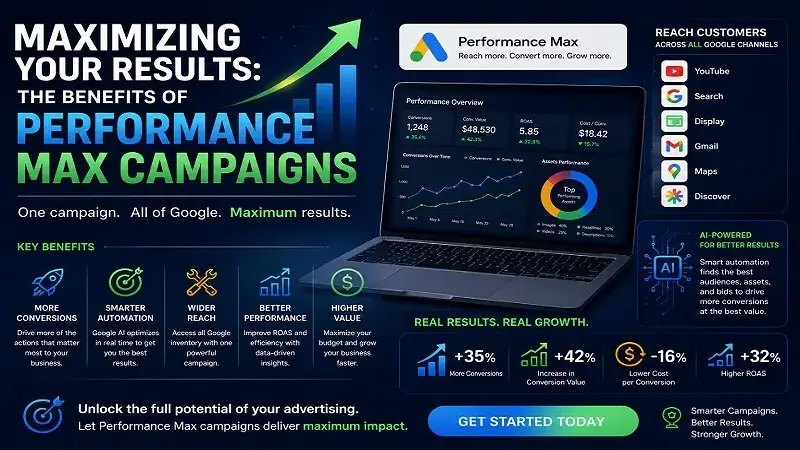
Are you a PPC Manager looking to achieve optimal results for your campaigns? Look no further than Performance Max campaigns. These campaigns provide benefits that can boost your PPC results. They help you reach your target audience more effectively.
In this blog post, we’ll look at Performance Max campaigns. These campaigns can optimize ad placements on different platforms. They also boost conversion rates and cut costs.
If you’re new to Performance Max campaigns or want to boost yours, this post shares tips to help you succeed in PPC advertising.
What Are Performance Max Campaigns?
As a PPC manager, you’re always looking for ways to optimize your campaigns for better results. That’s where Performance Max campaigns come in. These are a type of PPC campaign that prioritizes quality performance over quantity. Performance Max campaigns use smart targeting and bidding. This means your ads reach the right people at the right time.
This boosts click rates and leads to more conversions. It’s important to use analytics to truly optimize your Performance Max campaigns.
Analyze ad performance and user behavior data. This helps you make smart choices about adjusting your targeting and bidding strategies.
The right analytics tools help your Performance Max campaigns get the best results.
However, it’s important to note that managing PPC campaigns is no small feat. You need to check, optimize, and test your campaigns all the time. This way, you’ll get the best results.
That’s where a PPC manager comes in. A PPC manager focuses on running PPC campaigns for businesses. They have the expertise, experience, and tools required to help you get the most out of your campaigns.
Working with a PPC manager helps ensure your campaigns run smoothly and efficiently. This boosts campaign performance and saves you and your team time. You can then focus on other important business tasks. Teamwork: Project and Resource Management Software helps teams work better together. It makes workflows smoother and boosts productivity.
If you want to boost your ROI from PPC campaigns, hire a PPC manager today. This will help you make the most of your campaigns!
The Benefits of Performance Max for PPC Managers
As a PPC manager, you constantly seek ways to improve your campaigns and boost your ROI.
That’s where Performance Max comes in. This powerful tool provides all the analytics and insights you need. Use it to make better decisions about your PPC campaigns.
Performance Max tracks key metrics: click-through rate, cost per click, and conversion rate. These tools give you useful data to spot your strengths and weaknesses.
With this info, you can change your campaigns for better results. So, if you’re ready to take your PPC game to the next level, it’s time to give Performance Max a try!
As a PPC manager, you can enhance your campaign strategies with tools like Performance Max. This can lead to greater success.
You can segment campaigns and target specific demographics or keywords. This shows you which audiences care most about your products or services.
This lets you adjust your campaigns. You can target the right people at the right time. This will boost conversions.
Additionally, detailed reporting helps PPC managers track and analyze campaign performance. This makes it easy to adjust strategies based on data for better results.
Performance Max gives PPC managers strong tools. These help optimize campaigns and boost success.
Understanding Key Performance Indicators (KPIs)
As a PPC manager, knowing the key performance indicators (KPIs) is vital. They help you see how well your campaigns are doing.
To measure performance, get to know key metrics like:
- Cost per conversion
- Total clicks
- Impression share
- Click-through rate
You can analyze these metrics to see what works and what doesn’t. Then, you can adjust your campaigns as needed.
Every PPC manager aims to get the best performance in their campaigns.
This needs a strong grasp of KPIs. You must also adapt and optimize campaigns quickly using data-driven decisions. To beat the competition and succeed with performance max campaigns, track your KPIs closely.
PPC Manager
As a PPC manager, you need to watch your key performance indicators (KPIs) closely. This helps you meet your performance goals consistently.
It’s not about tracking your KPIs. You also need to consider seasonal changes that can impact these metrics. Holiday seasons, weather changes, and major events can affect your campaign performance in different ways.
Thus, as a PPC manager, it’s crucial to analyze the changes in your KPIs compared to the same period last year. This lets you gain useful insights. You can then adjust your campaigns to boost performance.
To stay ahead as a PPC manager, keep an eye on your KPIs. Also, think about seasonal changes when you optimize your campaigns.
Furthermore, being a successful PPC manager requires utilizing analytics to make informed decisions. A PPC manager can improve campaign performance by regularly analyzing data and adjusting campaigns when needed.
Analytics helps a PPC manager find the best keywords and ad spots for conversions. It also shows where improvements are needed.
A PPC manager can keep campaigns improving by tracking KPIs. By taking action when needed, they ensure the best results for their clients. A successful PPC manager is dedicated to constant analysis and optimization. This focus helps achieve the best results.
Strategies for Measuring Results with Performance Max
As a PPC manager, tracking and measuring your Performance Max campaigns is key. To do this, you need to use several metrics. Key ones are cost-per-click (CPC), cost-per-acquisition (CPA), and return on ad spend (ROAS).
These metrics provide insights into your campaigns’ performance. This helps you make data-driven decisions to boost your ROI. CPC is an essential metric that measures the amount you spend every time a user clicks on your ad.
CPA measures the amount you pay for each conversion generated by your ad. Lastly, ROAS measures the revenue gained from your ad expenses.
You can use these metrics to see which campaign works best. Then, adjust your strategy as needed. You can optimize your campaigns to reach more of your target audience. This helps reduce costs and boost conversions, all while staying within your budget.
As a PPC manager, tracking metrics is key. Focus on impressions, click-through rate (CTR), and conversion rate (CR). This helps you understand your campaigns’ performance better.
Check these metrics regularly. You’ll see what works and what doesn’t. Then, you can plan and improve your campaigns. This leads to better results, more engagement, and higher revenue for your business.
As a PPC manager, you should analyze your campaigns often. This helps you make smart, data-driven choices. Doing so ensures that you promote your business effectively. So, watching these key metrics will help you reach your business goals.
Optimizing Your Performance with A/B Testing
As a PPC Manager, I focus on improving campaign performance. A great way to achieve this is through A/B testing. This process allows you to compare two versions of an ad or landing page to see which performs better. Proven tips can boost landing page traffic. A/B testing helps attract more visitors and improve conversion rates.
This helps you see what works and what doesn’t. In the end, it can boost your click-through rates and conversions. A/B testing helps you improve your ads and keywords. This way, you get the best results from your campaigns. If you want to boost your PPC performance, A/B testing is essential for your strategy.
Meanwhile, being a PPC manager requires a commitment to constantly improving your campaigns. A/B testing helps you optimize each part of your campaign for better performance.
Experimenting with various ad copies, keywords, and images can help you learn. This will refine your strategy and improve results from your budget and resources.
Ultimately, the success of your campaigns depends on your ability to adapt and evolve. Using A/B testing to refine your strategy will help you become a top PPC manager.
Best Practices for Managing Results with Performance Max
As a PPC manager, you must have the right tools in place to measure and manage your campaigns. Analytics is a powerful tool. It gives you valuable insights into your campaign performance.
You can use tools like Google Analytics to measure performance. It helps you track key metrics, including click-through rates and conversion rates. This data can then be used to make necessary changes and adjustments to improve results.
Using analytics helps you find out which keywords, ads, and landing pages do well. It also shows you what needs improvement.
You can use this information to improve your campaigns and get better results. You can use analytics to track your target audience’s behavior. Then, adjust your campaigns to fit their needs.
A big advantage of analytics is measuring your campaign’s ROI (return on investment).
Check conversion rates and key metrics. This helps you see the real value of every click or lead from your campaigns. Analyzing this data helps businesses find the best strategies. Businesses that are verified often do better. They achieve higher conversion rates. They build trust, target accurately, and optimize effectively. This info helps you decide how to spend your budget. It shows which campaigns should get more priority.
Performance Max vs. Traditional PPC Campaigns
| Feature | Traditional Search/Display | Performance Max (P-Max) |
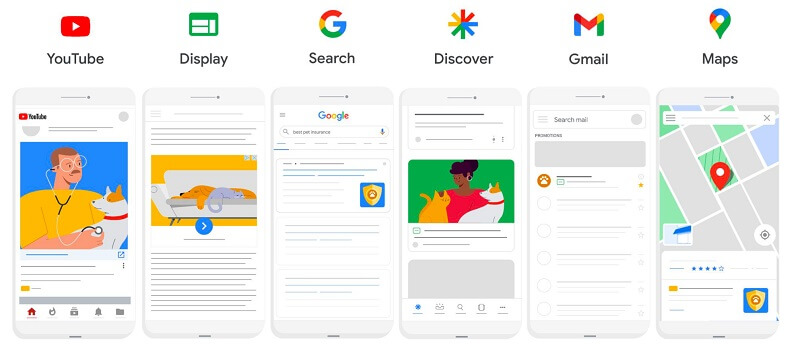
| Inventory Access | Siloed (Search only or Display only) | Full Google Ecosystem (YouTube, Search, Gmail, Maps) |
| Targeting Method | Keyword & Placements | Audience Signals & Conversion Goals |
| Bid Management | Manual or Portfolio Bidding | Fully Automated Smart Bidding (AI-Driven) |
| Creative Input | Single ad formats | Asset Groups (Dynamic combinations of images/videos) |
| Learning Period | Short (1-2 weeks) | Longer (4-6 weeks for machine learning) |
| Best For | Specific intent capture (Exact Match) | Scaling, Cross-channel reach, and New Acquisitions |
| Management Focus | Micro-managing keywords | Strategic steering & High-quality creative assets |
Frequently Asked Questions
Does P-Max cannibalise my existing Search campaigns?
Normally, P-Max would win out over the Broad Match keywords. However, Exact Match would always be preferred. To stay relevant in 2026, ensure your Brand Exclusions are set up correctly.
How long does the P-Max “Learning Phase” last?
Normally, waiting 4 to 6 weeks is recommended before any changes are made. The AI must have at least 50 to 100 conversions before it learns how to behave among your target audience.
Does P-Max cannibalise my existing Search and Shopping campaigns?
Use Performance Max campaigns to enhance your current advertising strategy. However, they often take priority over Standard Shopping and Broad Match Search keywords. To avoid keyword cannibalization in 2026, use smart keyword research. Also, apply the “Brand Exclusions” tool in your campaigns. This keeps your top Exact Match keywords active in your Search campaigns.
Why is video mandatory for P-Max success this year?
YouTube Shorts, part of Google, is now one of the best ad formats in 2026. For the best results, upload vertical videos. They should be high-resolution and last between 15 and 30 seconds. Understanding Video SEO can enhance visibility and engagement for your short videos. If you don’t provide good video assets, Google might create videos from your images. This can make your ads look less professional and drop your ad strength rating to “Poor.”
How often should I refresh my Asset Groups to avoid “Ad Fatigue”?
The ideal time frame for 2026 is once every 6 to 8 weeks. You don’t need a full reconfiguration. Check the report on the “Asset Detail” page. Replace any assets that score poorly (“Low”). Replacing the 2-3 lowest-ranking headlines or pictures is enough.
Conclusion
In conclusion, Performance Max campaigns are a game changer. They help PPC managers boost advertising performance and achieve better results. These campaigns improve ad placements on different platforms. They boost conversions and cut costs. Combining effective audience engagement tools helps businesses connect better with their target audience. This leads to stronger marketing strategies. Boost your Performance Max campaigns with these tips. Improve your PPC performance and stay ahead of the competition.
Performance Max campaigns have become essential for modern PPC strategies. Performance Max, like free business automation software, uses automation and audience targeting. It also offers cross-platform flexibility to boost campaign performance for businesses. While automation plays a major role, success also depends on other factors.
Businesses should:
- Regularly check their campaigns.
- Use high-quality creatives.
- Know their audience well.
- Set up accurate conversion tracking.
- This helps them get the best results.