
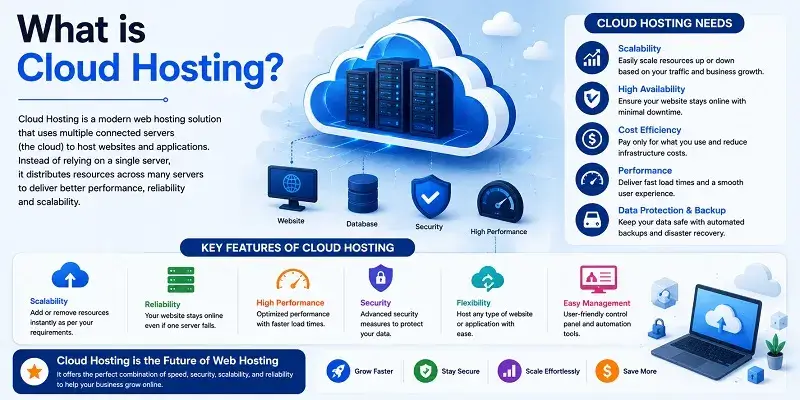
What is cloud hosting? Cloud hosting is a type of web hosting using the resources of many clustered servers. It means your site uses virtual resources from different servers. This helps manage all aspects of hosting your website. Cloud servers come with all the software they need. They can also work as independent units.
In today’s digital world, site speed, availability, and scalability matter. They are key for both users and search engine optimization. If the site is slow or frequently down, it will have a negative impact on its visitors and SEO performance. Cloud hosting solves many problems. Resources on many servers help the site run well, even when it’s busy.
What is Cloud Hosting – The Cloud Defined
The cloud means many servers linked online. You can rent these servers for applications or software.
Cloud services can include:
- Data sharing
- Hosting
- Software use
- Web hosting
The cloud can also mean cloud computing. This is where different servers connect to share the load. This means that instead of using one strong machine, we can share complex tasks across several smaller computers. Cloud hosting offers a cheaper option than dedicated servers. With dedicated servers, companies must build and manage their own data centers.
The Architecture of Cloud Hosting
Cloud hosting architecture differs from traditional web hosting setups. Many shared hosts use a centralized method. One server holds many websites. However, the moment the server fails or goes down, all the accounts on it will also go down.
Meanwhile, cloud hosting and its distributed approach can solve this issue. Every site spreads across many locations. So, you won’t face downtime, even if one server in the cluster has an issue.
Large websites like social networks and search engines use many servers. This way, no single server gets overwhelmed by the load.
Cloud Hosting and Types of Websites That Use It
Like regular hosting, cloud hosting can also be used by various types of websites. However, there are some instances when it is specifically more popular.
If a website plays a critical role in a company’s operations, then cloud hosting is a smart and reliable choice. It’s great for busy websites, corporate sites, eCommerce stores, and WordPress lead generation projects. Speed, uptime, and scalability are key to drawing in and converting visitors.
Cloud hosting can make scaling easier if you need more power. This is a great option for publishing firms and news agencies. They often expect many clicks or traffic spikes on their posts.
It is a great option often, and this makes it a strong rival to virtual and shared hosting servers.
Cloud Hosting in the Future
Cloud hosting has come a long way since big companies began using it years ago. But its price might need to drop more to be a better choice for small businesses. Lowering cloud hosting costs will lead to big growth in the coming years. For all you know, one day in the future, everybody will be on the cloud.
Cloud Hosting vs Shared Hosting Comparison Table
| Feature | Cloud Hosting | Shared Hosting |
|---|---|---|
| Performance | Faster and more stable | Can slow down during high traffic |
| Scalability | Easily scalable | Limited scalability |
| Security | Advanced security features | Basic security |
| Downtime | Very low downtime | Higher risk of downtime |
| Cost | Slightly expensive | More affordable |
| Traffic Handling | Handles high traffic easily | Suitable for small websites |
| Resource Allocation | Dedicated virtual resources | Shared resources |
| Best For | Businesses and growing websites | Beginners and small blogs |
Frequently Asked Questions
What is cloud hosting in simple words?
Cloud Hosting is a method used by web hosting companies. It connects many servers to host a specific website. Cloud hosting uses many servers to boost website speed and performance. This is different from traditional methods.
Is cloud hosting better than shared hosting?
Yes, cloud hosting is usually better than shared hosting. It offers stronger performance, higher scalability, improved security, and better uptime. Shared hosting suits smaller sites, but cloud hosting is better for growing businesses. It offers faster page loads and improved traffic management. Merging cloud hosting with smart WordPress security tips boosts your website’s safety and performance.
Who should use cloud hosting?
Cloud hosting is great for:
- Businesses
- E-commerce shops
- Popular blogs
- Company sites
- Websites expecting more visitors
Cloud hosting offers reliable uptime, scalability, and improved performance for websites. It works well because it does not depend on a single physical server.
Does cloud hosting improve website speed?
Yes, cloud hosting can boost your website’s speed. It does this by sharing resources across many servers. If one server gets busy, another server steps in. This way, they share the load and keep things running smoothly. Faster loading speeds boost user experience and lower bounce rates. They can turn organic traffic into loyal visitors or customers. This happens when users stay engaged longer on your site.
Is cloud hosting secure?
Cloud hosting offers strong security. Most providers use advanced protection measures. These include firewalls, automatic backups, antivirus systems, SSL encryption, and DDoS protection. Using SSL certificates is key. They encrypt data transfers, boosting website trust and security. A big plus is that the data is saved on many servers. This cuts down the risk of losing everything if one server fails.
Conclusion
Cloud hosting services will lead the future of web hosting. They offer great flexibility, scalability, and performance. They boost website protection, especially when used alongside free security WordPress plugins. These plugins help check threats and improve security measures. Cloud-based systems use many servers, not one. This spreads resources efficiently, which boosts reliability and cuts downtime for businesses.
As online competition increases, businesses and individuals need a trustworthy hosting provider for their websites. Improving website performance is key. Cloud hosting is a great solution. It lets you easily scale resources. This helps keep loading speeds fast, ensures stability, and boosts performance.