
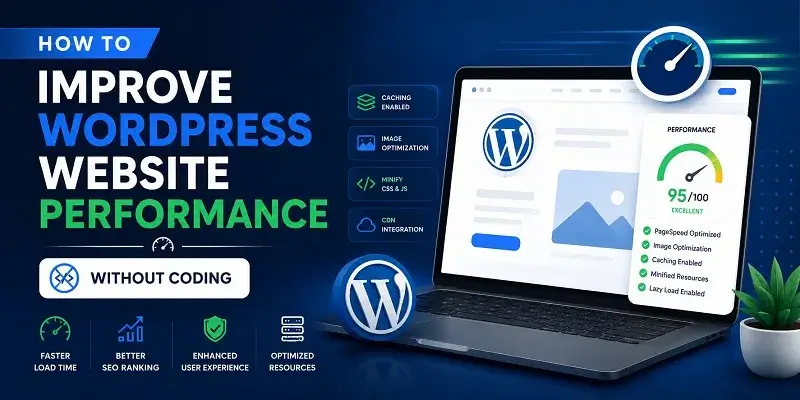
WordPress optimization techniques that do not require programming knowledge are essential for those beginners who seek speed and cleanliness on their websites without having any programming expertise. The main factors determining the speed and performance of a website include user experience, search engine optimization, and completeness of the website.
In today’s competitive line environment, speed and overall performance are more important than ever. Many people agree that it takes coding expertise to improve the functionality of a website, but this is generally not always the reality. One satisfying thing is that WordPress often has multiple tools that allow you to customize your website without even having to write down a line of code.
With small changes like deciding on the right website hosting system, optimizing images, installing the right plugins, you can effortlessly accelerate the general performance of your website. The complete guide is based on simple techniques which can help you in improving your WordPress performance.
Why Website Performance Matters
Improves User Experience
The display of the website has an important place in how you will communicate with your target audience. If the pages are fast, then people who visit your website will clearly find out what they want. Thus, it is easy for them to get pleased with everything. Having a sequential website may irritate users and push them to leave even before they start searching for the needed content. The faster launch will ensure that people have fun browsing through your website.
Boosts Search Engine Rankings
Search engines remember website speed as an important evaluation factor. Faster websites are much more likely to look good in search results. Increased efficiency will increase visibility and may lead to even more organic visitors. Website speed optimization is an excellent SEO technique that will give you an edge over your competitors.
Increases conversion rate
Website speed affects conversions without delay. When your website masses online quickly, users are more likely to complete actions like making a purchase or signing up for a carrier. Even a small delay can reduce conversion. A fast website generates ideas and makes it less complicated for customers to take action.
Reduces Bounce Rate
Slow websites often give a good price jump. If the loading time of the website exceeds the person’s current power limit, he will leave. By increasing overall performance, people will spend more time surfing through your site. Apart from reducing the bounce rate, it will export high-quality signals to search engines like google and yahoo.
Mobile compatibility
Everyone uses their mobile devices for visiting different websites. An optimized site will ensure people like using the site. To draw more people to your site, you should consider an increase in overall performance.
Common Reasons for Poor Performance
Low Quality Hosting Services
One of the main reasons for the overall performance of a negative website is less adequate website hosting. A disadvantage with shared hosting is that you cannot access many resources. This might make your site slower because you have to share the server resources with other sites. This can be risky especially when there is a peak in traffic.
Unoptimized images and media files
Large and uncompressed snapshots can significantly increase page load times. Many website owners add too many decision images without resizing or compressing them. This makes pages heavy and slow to load. Image optimization is important for increasing overall performance.
Too Many Plugins
Using too many plugins can add unnecessary weight to your website. Each plugin requires resources and can trigger multiple scripts. This can slow down your site and create compatibility issues. Limiting plugins to the important ones allows it to maintain good performance.
Heavy theme and poor design
Complex themes and animations with too much capacity can gradually bring your website down. Poorly coded factors also affect overall performance. Choosing a lightweight and optimized theme improves speed and user experience.
Lack of Storage and Optimization
Without archiving, your website methods every request from scratch. This increases server load and slows down performance. Proper optimization strategies like caching and code reduction are essential for faster load times.
How to Improve WordPress Website Performance Without Coding
Choose a Fast and Reliable Hosting Provider
The foundation of a fast website starts with proper website hosting. A reliable web hosting provider offers higher speed, uptime, and server performance. Managed WordPress hosting is a great option because it is miles optimized primarily for WordPress. It helps your website load faster and helps you perform well with visitors without the need for technical expertise.
Use a lightweight and customizable theme
Subjects play a primary role in overall performance. Heavy themes with complex tasks can gradually slow down your website. Choosing a short theme with flexible layout improves loading speed and user experience. A simple theme reduces useless code and ensures higher performance.
Optimize Images Prior to Upload
One of the largest reasons why websites become slow is through large images. The optimization of images prior to upload will decrease the file size of the document with minimal impact. The correct layout and size of images will ensure that they perform efficiently and will enhance general performance.
Utilize Cache to Speed up Download Time
Keep a copy of the static version of your website to make it quick and easy to download by visitors. This will minimize the effort required to optimize your whole website. Caching has a significant effect on improving the speed of a website.
Use a Content Delivery Network (CDN).
A CDN distributes the content of your website to multiple servers all over the world. When users go online to your website, they have the right to access it from the nearest server, reducing load times. This is especially helpful for websites with international visitors.
Limit the use of plugins
Website speed can be affected by excessive use of plugins. Each plugin adds two requests to the code. It is best to clear your list of plugins by removing ones that aren’t useful. This will help decrease the growth rate and complexity.
Update WordPress, Themes, and Plugins
Update your WordPress to be more current for optimum speed and security on your website on the internet. You may be feeling a lack of mobility and imbalance after updating. This is particularly the case if you haven’t updated in a long while. Updating is not only about performance but also security.
Enable lazy loading for pix
Add plugins that use lazy loading so that your images load efficiently. Especially on websites that have a lot of images. This is because lazy loading will help with your initial load time. In general, it will improve your website performance.
Optimize your database regularly
Over time, your database accumulates redundant facts, including research and junk mail responses. Cleaning and optimizing the database improves performance and speed. Regular maintenance keeps your website going for a smooth navigation.
Minimize Scripts and External Materials
External scripts such as ads, fonts, and control code can gradually slow down your website. Every external request will increase the loading time. Limiting these scripts to use only the most important assets can boost performance and ensure faster loading of pages.
Advanced Tips Without Coding
Use Performance Optimization Plugins
One of the very best ways to increase website speed without coding is to use display plugins. These plugins typically include tasks such as storage, file optimization, and image compression. They reduce server load and increase page speed with minimal effort. Choosing a reliable plugin can simplify customization and ensure consistent performance improvements.
Enable Browser Cache
Browser caching allows frequently used web page elements to be stored within the user’s browser. When the passenger returns, the browser is hundreds of times faster because it is no longer necessary to reload a whole lot from scratch. It improves the loading speed and also supplements personal pleasure without the necessary technical ability.
Optimize Fonts and Reduce Requests
Using too many fonts or downloading fonts from external sources can gradually slow down your website. Limiting font styles and selecting a font for a device can increase general overall performance. Reducing requests to external assets helps speed up load events and will increase overall performance.
Check the website often
Regular monitoring will let you know how your website looks over the years. Use the composite monitor equipment to monitor load speed and detect problems. Monitoring allows problems to be updated before they affect users.
Just use small plugins
Not all plugins are optimized for speed. Choose lightweight and nicely coded plugins that don’t add useless weight. This ensures better performance and smooth enjoyment.
Benefits of Improved Performance
Improved User Experience
When your website is quick, visitors have a better experience navigating the site. Users will have no problem accessing the material on your website since there will be no delays. Good website performance makes visitors stay longer by visiting more pages.
Improved Search Engine Rankings
Search engines always favor quick websites as they deliver a good user experience. Your website performance will give you an advantage over other sites because it allows for better SEO and higher rankings.
Low Bounce Rate
Websites that load slowly tend to lose users at an early stage. With performance optimization, you get lower bounce rates as users spend more time on your website. The search engine benefits from such actions.
Common Mistakes to Avoid
Ignore Image Optimization
One of the common mistakes made with the help of website owners is uploading large images without compressing them. Images that have a high-resolution phase take up extra area on your website, and they contribute to the general slowness of the loading technique. Most website owners usually ignore image optimization before importing. Using optimized snapshots ensures that the website maintains its speed and loads the pages in real-time.
Using Too Many Plugins
Plugins have become an integral part of most web pages. They help website owners add different functionalities to their websites. However, using too many plugins has adverse effects on website speed. Plugins increase the server load, hence slowing down the loading process.
Choosing Poor Hosting Services
Less micro web hosting is the main motivation for slow websites. With limited resources, shared hosting sites can struggle to control visitors. This causes load times and downtime to be slow. Investing in a reliable web hosting provider ensures greater performance and balance.
Does not enable storage and CDN
Many beginners skip caching and CDN configuration. Without caching, your website creates every query technique from scratch. A CDN makes it easier to deliver content quickly to users in different locations. Ignoring these tools can reduce performance notably.
Keep track of updates and renewals
An old version of the WordPress Center, themes, or plugins may result in decreased speed of your site or even become the cause of potential security problems. Updates help ensure good performance and effective functioning of the whole site.
Future Trends in Website Performance
However, website speed optimization is changing with new technologies and more intelligent optimization techniques. For example, artificial intelligence is being used to optimize website loading times by detecting any problem and fixing it.
Secondly, edge computing technology has been developed along with improved CDN technologies. Such technology allows Siege to serve websites from servers that are closer to the user, thereby reducing the best time to load.
Faster website hosting responses and the improvements in the cloud era have helped make web hosting extra reliable and scalable. In addition, modern website development technology allows for faster and much less resource-hungry websites.
Mobile optimization becomes more common since people increasingly start using their smartphones for accessing websites.
In the future, website speed optimization will be centered on automation and increased loading speeds.
Conclusion
Knowledge about ways to increase the efficiency of a WordPress website without programming allows users to develop a fast website without being able to code. This aspect is critical in ensuring that the site has an excellent performance level.
Here are some great ways to boost your website speed:
- Choose the right hosting provider.
- Optimize images.
- Enable caching.
- Remove unnecessary plugins.
The process is relatively simple and does not require extensive technical expertise. Many of these optimizations can be done without mastering the top programming languages. This makes website performance improvements easy for both beginners and experienced users.
Check on the performance of the website as a whole to gauge speed and efficiency. The new features, if any, will assist in modifications in the future.