

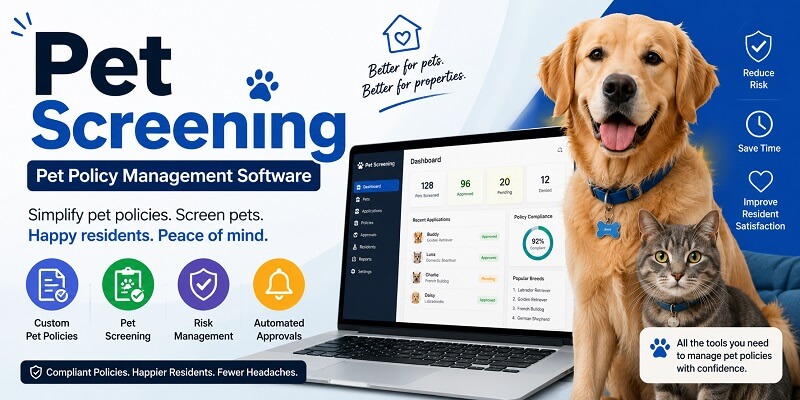
Property management is always changing. With more pets in rental homes, landlords and managers face new challenges. Balancing pet-friendly policies with property value protection isn’t just a trend; it’s essential. Pet Screening excels in robust pet screening and policy management. It helps multifamily, single-family, and commercial housing providers manage pet policies easily. This software ensures compliance and transparently reduces risk.
Pet-friendly buildings are on the rise. Owners want more ways to welcome pets. Most landlords find it tough to manage pet information and policies the usual way. Modern pet-screening systems make life easier for both landlords and tenants. These innovations help organize pet information and reduce risks for everyone involved. Using this software creates pet-friendly spaces that keep the property safe and protected.
What is Pet Screening?
Pet screening is the process of checking pets and their owners before they can rent a place. It’s more than just a basic pet deposit. It collects detailed info on each animal’s breed, vaccination records, behavior history, and more. A digital pet portrait often comes with a scoring system. It helps property managers assess risks, charge fees, and hold parties accountable.
Reasons why Property Managers should have Pet Policy Management Software
Rental houses that allow pets can attract good tenants and encourage longer leases. But unclear pet policies may cause damage, lawsuits, and unhappy neighbors. The most useful pet screening websites:
- Screening protocols and online profiles of pets should be uniformly tested.
- Here are some resources about local laws, HUD rules, and the Fair Housing Act for help and support animals:
- Local regulations on help animals
- HUD guidelines for housing providers
- Fair Housing Act rules on support animals
These resources can help clarify your rights and responsibilities.
- Automate record-keeping. This way, managers won’t scramble for documents or incident reports when it’s too late.
- Help boost earnings by using premium pet rates and recovering lost revenue on pets.
- Minimize illegal pets, fraudulent ESA claims, and lawsuits.
The major characteristics of Pet Screening Software
We will start with the highlights of the best pet policy management websites:
- Real-time dashboards: Track pets, their status, rent, and vaccination history all in one place. You can also see past incidents easily.
- Digital Pet Profiles: Each pet will have a detailed digital profile. This includes pictures, breed info, actions, medical history, and legal attestations. This assists managers in measuring risk and ensuring adherence.
- AI-driven compliance: Technologies like PetComply.ai use machine learning to spot undisclosed pets. This system automatically sends compliance messages, boosting revenue and efficiency in property management.
- Automated Records: Keep vaccination records, behavior certificates, and pet policy contracts safe in the cloud. Access them anytime.
Third-party integration into property management systems
Top platforms connect to third-party property management software like Yardi, AppFolio, and Buildium. They also include pet management in your workflows.
- Animal verification: The software helps check requests for emotional support and service animals. It ensures these requests are treated fairly and legally.
- Policies can be customized. Managers can set breed limits, pet counts per unit, fees, and more based on their property needs.
How PetScreening Works
PetScreening makes paperwork easy. It offers a smooth digital experience for residents and property managers. The following is the general flow of the process:
- The resident shares complete pet info online. This includes breed, age, health records, and behavior details.
- The software produces a Pet Profile and a FIDO Score to determine the type of risk for the pet and its owner pair.
- For assisted animals, the platform requests supporting documents. It checks the application against FHAct/HUD requirements and gives a compliance decision.
- A manager can view each pet’s details, compliance status, and incident history on the dashboard. This makes it easy to make decisions or conduct a regulatory audit quickly.
Property Manager Advantages.
Pet policy management software isn’t convenient; it gives you a competitive edge.
- Consistency: Digital screening ensures a consistent review of pet and help animal applications. This promotes fair housing and supports uniformity.
- Time savings: Online submissions and automated processes will replace manual paper and phone submissions. This change will free up staff to focus on higher-value work.
- Increased revenue growth: Managers will help gather fees for unreported pets. This money will boost revenue.
- Risk mitigation: Documented screening and incident reporting lower the chance of costly disputes or repairs. This helps protect property investments.
- Retention of residents: Housing that allows pets is popular. Using a pet screening process helps managers attract new tenants and reduce vacancies.
- Legal protection: Following fair housing and HUD rules for service animals will lead to less litigation and more peace of mind.
Resident and Pet Owner Benefits.
It is not only winning on the part of the property managers, but also on the part of the pet-owning families:
- Transparency: Pet policies are known to residents; electronic attestations guarantee fair written contracts.
- Support for help animals: Verification measures confirm their eligibility. This removes guesswork and reduces stigma.
- Online Convenience: Online submissions are quick and easy. They help residents stay organized and on track.
- Some platforms, like PetScreening, provide access to pet health resources. They have special prices for users who comply. This makes renting easier and more enjoyable.
- Community harmony: Taking responsibility lowers conflict among neighbors and fosters a pet-friendly neighborhood.
Real-World Impact Industry Data
PetScreening includes over 7.6 million rental units across the U.S. It caters to various housing types, such as multifamily, single-family, affordable, student, and military options. Its process shows that 60% of accommodation requests might be inadequate or fraudulent. This knowledge can help managers avoid income loss and legal trouble.
Compliance and Security
Security matters. Good pet management software keeps data safe with GDPR-level security. It helps managers track every action, which lowers the risk of conflicts or audits.
Uninterrupted Software Interaction
Top platforms connect directly with popular property management software like Yardi, OneSite, and Entrata. This means there is no need for double data entry, which helps reduce errors.
The AI and Future of Predictive Analytics.
PetComply.ai, launched by PetScreening, uses smart analytics to find compliance gaps. It also educates residents in real time. This helps properties reach nearly 100% compliance. This free feature is available to all current users. It boosts efficiency and revenue for property managers.
Pet Policies that are Profitable
An effective pet policy is not good for avoiding headaches. The landlords and property managers can save time and money by:
- Expand new income sources on pet charges, deposits, and pet rent.
- Cut down on the maintenance expenses by screening out harmful or hostile animals.
- Follow HUD laws and fair housing rules. This helps you avoid fines and claims.
- Provide a luxurious, pet-friendly living space that will attract responsible tenants.
Comparison Table Pet Policy Management
| Feature | Manual Paperwork (Old) | PetScreening / AI Platforms (2026) |
| ESA Verification | High Risk of Fraud | Verified via HUD-compliant Legal Team |
| Revenue Capture | Estimated / Inconsistent | $400M+ in Captured Global Revenue |
| Risk Assessment | Subjective / Guesswork | Data-Driven “FIDO Score” System |
| Compliance | Manual Audits | Real-time AI Monitoring (PetComply.ai) |
| Integration | Standalone | Direct Sync with Yardi, AppFolio, Entrata |
Frequently Asked Questions
How has HUD’s stance on Emotional Support Animals (ESAs) changed in 2026?
HUD has stepped up its efforts to enforce reasonable accommodation requirements by 2026. Landlords can’t charge for legitimate ESAs. They now use advanced tools to verify if letters from healthcare professionals are genuine.
What is PetComply.ai, and how does it help property managers?
PetComply.ai is a tool that uses AI for predictive analytics. It is built into pet screening software. In 2026, PetComply.ai will use AI to find undeclared pets. It will gather data from sites and incident reports. This will help managers recover losses.
Is it legal to have breed restrictions in 2026?
Landlords may still set breed restrictions for common pets. This often depends on insurance needs. Under the Fair Housing Act, breed and weight restrictions do not apply to service animals. Current screening software captures this information to prevent discrimination lawsuits.
How much revenue can a property manager recover using pet screening?
In 2026, property managers earned about $87.9 million from pets. This revenue came from finding “hidden” pets and using “FIDO Scores.”
What is the benefit of a “Digital Pet Profile” for tenants?
The Pet Profile acts like a “Pet Resume.” By 2026, residents will use verified profiles to switch between pet-friendly properties. They can show that their pets are vaccinated and well-behaved. Digital pet profiles, like free WordPress security plugins, boost trust and safety. They can also help lower security deposits.
Conclusion
Pet screening and pet policy management software changed the rental housing industry. They enhance safety, raise tenant satisfaction, and increase profits for property owners. Just like Teamwork: Project and Resource Management Software for Client Work keeps businesses organized, these tools help property managers run pet-friendly housing well. They ensure compliance, consistency, and boost revenue potential.
The opportunity lies in the growth of pet ownership in rentals as opposed to being a barrier. Landlords and managers can use the right screening software to accept pets. This change can reduce risks and create benefits for everyone involved.