

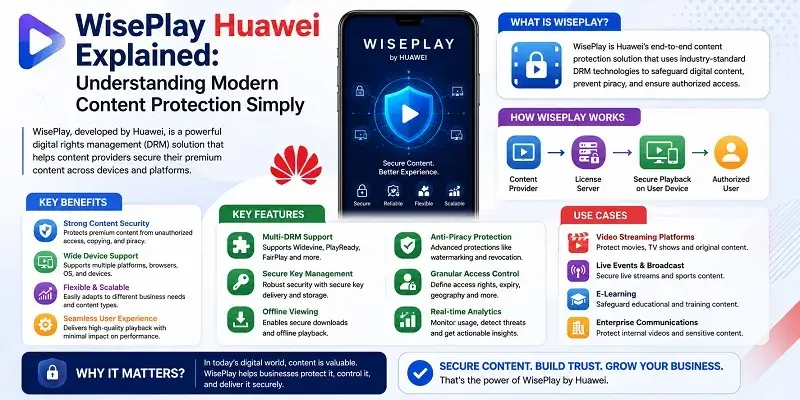
Many content producers and platform operators seek efficient security solutions. Yet, they often feel confused by the complex topic of digital content protection. Wiseplay Huawei shows how Huawei safeguards premium media content using advanced digital rights management. It’s easier to understand how modern content protection works when we break it down into simpler parts. As resources like WisePlay Huawei Explained show, understanding these basic ideas is crucial whether you produce original video, distribute entertainment, or just want to learn more about streaming technologies.
This guide explains the main ideas and principles of the technology for everyone in the digital content world. It also explains the practical effects.
WisePlay Huawei Explained
1. The Basic Purpose Behind Content Protection
WisePlay helps stop the illegal copying, sharing, or distribution of valuable digital media by authors and distributors. Creating content takes a lot of time, skill, and money. These efforts should be protected from theft and piracy. Without strong security measures, startups won’t want to invest in website content. This is because anyone could easily copy and share premium material.
Digital rights management systems, like WisePlay, create technical barriers. Only authorized viewers with the right license can access content due to these barriers. This protection covers the entire content journey. It begins with encoding, then goes to transmission, and finishes with replay on viewer devices. The main goal is to balance two things. First, it aims to block illegal distribution that harms content value. Second, it allows paying clients to access the content legally.
2. How Encryption Secures Your Content
WisePlay uses encryption to scramble audio and video data. This makes the information unreadable during transmission and storage. Think of encryption like a tricky lock. You need the right key to open it and access protected content.
Mathematical methods encrypt content at the source. They change regular video files into jumbled data streams. Without the right decryption keys, interceptors can’t read or copy useful content. This is true as encrypted streams travel across internet connections. Only approved devices with the right keys can unscramble the data into viewable video and sound. For viewers who want perfect playback, this encryption happens automatically and quietly. The strength of encryption methods determines how well content can resist attacks from skilled pirates.
3. The Role of Licensing in Access Control
Licensing is the system that manages who gets the decryption keys. These keys let people access protected content under certain conditions. Devices request licenses from authorization servers to verify user permissions before playback begins. These servers confirm active memberships, rentals, or buy records to ensure proper access. When explaining technical systems, it’s important to create SEO-friendly content. This helps users and search engines understand digital rights management concepts better.
Approved requests receive temporary licenses with decryption keys. These keys are valid for specific periods, matching subscription terms or rental durations. This dynamic licensing strategy enables flexible revenue models. These include subscriptions, leases, purchases, and even free access supported by ads. If subscriptions expire or there’s suspicious activity, license servers can quickly cut off access.
4. Hardware Security Foundations Explained
WisePlay stands out because it uses hardware security. This feature is built into Huawei devices during production. It doesn’t rely only on software protection. Sensitive processes occur in secure conditions with these hardware security modules. They act like vaults built into device CPUs.
Protected content and decryption keys are never stored in parts of memory that harmful software can access. Hardware-based security is tougher against attacks. It requires physical tampering, not remote hacking. This makes it more reliable than software-only methods. This security setup is like modern bank cards. They use chips to protect transactions. Unlike magnetic strips, chips are hard to copy.
5. Streaming Format Compatibility Essentials
WisePlay uses different streaming codecs. Each one has a unique strategy for delivering video content over the internet. The two most popular streaming protocols today are MPEG-DASH and HLS. Almost all video platforms use them.
Adaptive streaming systems adjust video quality based on bandwidth. This helps improve picture quality and reduce buffering. Understanding video SEO is key, especially with protected video formats and streaming platforms. WisePlay boosts security for common formats. It works well on different devices without strict delivery methods. New standards like CMAF make streaming easier and work across different platforms. Content made for one format may need conversion to work on different ones.
6. Cloud Architecture and Infrastructure
WisePlay operates as a cloud-based system. It uses security features on remote servers, which you access through the internet. Content providers don’t need to buy or manage expensive on-premises security systems anymore. This is all thanks to cloud architecture. Expert providers manage cloud data centers that keep authorization systems, license servers, and encryption key management secure.
Content providers can use APIs to access security services. These APIs connect to their content management and delivery systems. With cloud deployment, capacity can automatically scale based on real viewer demand. This happens without needing any human help. Updates, security patches, and feature improvements are automatically deployed. There’s no need for local installations or service disruptions.
7. The User Experience Perspective
Effective content protection must be invisible to users during normal use. It should also block any attempts at unauthorized access. When WisePlay is set up correctly, viewers can pick what they want to watch. There are no delays in logging in, and the quality stays high. Secure processes provide licenses, verify entitlements, decrypt streams, and check for suspicious activity. These steps ensure a smooth experience.
Users notice security issues only when access is blocked. This can happen due to expired subscriptions, geographical limits, or device restrictions. Balancing strong security and consumer convenience is tough. Too much security can cause friction. This may lead to less happiness and more cancellations.
Comparison of Top DRM Solutions
| Feature | Huawei WisePlay | Google Widevine | Apple FairPlay |
| Primary Ecosystem | Huawei / HarmonyOS | Android / Chrome / TVs | iOS / macOS / Safari |
| Security Level | Hardware-Level (TEE) | L1 (Hardware) to L3 (SW) | Hardware-backed |
| Cost | Free for HMS Developers | Free (requires server cost) | Apple Developer Fee |
| Streaming Formats | DASH, HLS, CMAF | DASH, HLS, MSS | HLS only |
| Best For | High security on Huawei | Global Android reach | Premium Apple users |
| Integration Speed | Fast (SDK-based) | Moderate | Complex (KSM required) |
Frequently Asked Questions
What is the difference between WisePlay and other DRM systems like Widevine?
Google Widevine and Apple FairPlay dominate the market. However, WisePlay performs best with Huawei. WisePlay stands out because of its Hardware Root of Trust technology. This tech is built into Kirin and Snapdragon chipsets used by Huawei.
Is WisePlay Huawei free for developers to use?
Indeed, WisePlay is available today as a free DRM system under the HMS Core services. It is affordable for start-ups and independent creators. They need premium protection but can’t pay the license costs of PlayReady.
Which streaming formats are compatible with WisePlay?
WisePlay is flexible and works well with popular adaptive bitrate protocols. These include MPEG-DASH (fMP4) and HLS (fMP4/TS). WisePlay supports CMAF (Common Media Application Format). This makes it easier to stream protected content on different devices.
Can WisePlay protect content for offline viewing?
Of course! WisePlay lets users stream videos anytime. They can also securely save them for offline viewing. WisePlay, like top free WordPress client portal plugins, gives users safe access. It issues licenses that let users watch downloaded and encrypted videos, even offline.
How long does it take to integrate WisePlay into a streaming app?
Integration has become easier for Huawei by using the HMS Core SDK. Experienced developers can complete basic integration in 3 to 5 working days.
Conclusion
WisePlay Huawei offers a smart way to safeguard digital content. It combines strong security with easy use. Grasping key digital rights management ideas is as vital as applying WordPress security tips. This knowledge helps individuals and businesses protect content and choose effective security strategies.
Understanding the protection methods of Doverunner becomes crucial for anyone involved with the production, delivery, or consumption of digital material in international markets, as streaming continues to dominate the distribution of entertainment.