

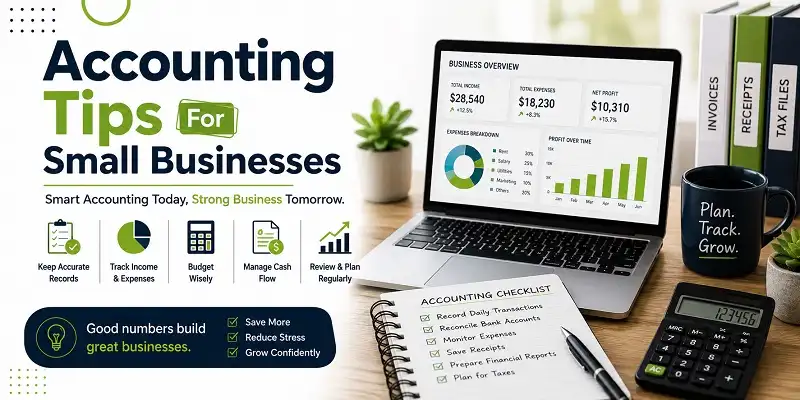
Hey readers! In this article, I’ll share seven key accounting tips for small businesses. If you own a small business, keep on reading.
Big companies have their own accounting departments. These teams handle accounts, salaries, and bills. For the small business, there isn’t much to do. It runs at a small scale so that the owner can handle the account alone.
No matter the size of your business, you need basic accounting practices. These practices help ensure good financial management.
List of The 7 Essential Accounting Tips For Small Businesses:
1. Separate Your Business And Personal Expenses
2. Establish Your Budget
3. Always Pay Attention To Any High-Cost Expenses
4. Use Bookkeeping Software
5. Select An Accounting Method
6. Always Keep Accurate Records
7. Keep The Books Up To Date
1. Separate Your Business And Personal Expenses
One of the foremost things that you need to do is separate your personal and business expenses. You need to open a separate bank account to handle business transactions.
Opening a separate account offers tax benefits. It also helps you track your expenses easily. If you take a loan for business, it will be easy to isolate it from personal expenses.
To open a business account, consider these options:
- Checking account
- Savings account
- Credit card account
- Merchant services account
All these let businesses accept credit and debit card payments from customers.
2. Establish Your Budget
One of the key things for keeping a good account is establishing your budget. Even if you run a small business or startup, you need a business plan. It should outline your spending and projected revenue.
Setting up your budget and maintaining that limit can ensure excellent financial health.
3. Always Pay Attention To Any High-Cost Expenses
You often face tough business choices. You might choose to hire workers to create a product or invest in large marketing plans. Performance Max campaigns offer benefits that help businesses make smarter advertising choices. This can lead to better marketing results.
These are all big expenses, and you must keep an eye on such expenditures. To reduce costs, come up with a smart plan and outsource your work at cheaper rates.
4. Use Bookkeeping Software
To organize your business account, you can opt for bookkeeping software. In the bookkeeping software, you can track all your income and expenses on a sheet.
Seeing all the information on the sheet will help you plan your next business move. Keep everything in writing. This way, you’ll have records of your spending and income. The software is easy to use, even if you don’t have the skill set to enter data.
Put the right information on it, and the rest will be done automatically. Also, having software means that you don’t need to hire an accountant.
5. Select An Accounting Method
Small businesses need a clear and simple accounting method. As an entrepreneur, you probably don’t have time for extra details or complex accounting methods.
Even if you are good with numbers, don’t waste time here; opt for an easy method. You’ll need your accounting details for taxes. So, pick a method that works worldwide.
6. Always Keep Accurate Records
A lot of people have the habit of cooking business books to take advantage of a certain condition. It’s important to keep accurate business records. Exaggerating them won’t help your goals.
Accurate records show your earnings, employee payments, and details for pay stubs.
If you put the right data in the software, it will keep the data accurate for many years. This way, your financial data is stored digitally, and you can access any entry anytime you want.
7. Keep The Books Up To Date
Some people enter data at the start of the month. But then, they get lazy and skip some at the end. This causes a serious gap in the data.
Eventually, you end up with plenty of data missing, and when you look at it, it doesn’t make any sense where you were. That’s why it is crucial to keep your accounting books up to date.
Show the books to someone. They’ll see your company’s status. This can reveal many business opportunities. Automatic receipts and invoices are good ways to keep your accounts up to date.
Small Business Accounting Comparison Table
| Accounting Practice | Benefits For Small Businesses | Common Mistakes To Avoid |
|---|---|---|
| Separate Business Expenses | Better financial tracking and tax management | Mixing personal and business transactions |
| Budget Planning | Controls unnecessary spending | Not updating the budget regularly |
| Bookkeeping Software | Saves time and improves accuracy | Entering incorrect data |
| Accurate Financial Records | Helps during tax filing and audits | Ignoring small transactions |
| Cash Flow Monitoring | Improves financial stability | Overspending without planning |
| Updating Books Regularly | Keeps business records organised | Delaying entries for weeks |
| Choosing Accounting Method | Simplifies financial management | Using overly complicated methods |
Frequently Asked Questions
Why is accounting important for small businesses?
Accounting helps small businesses manage their income, expenses, profits, and taxes correctly. Accounting provides a clear view of the firm’s finances. This helps management make informed decisions. Good accounting practices help reduce financial errors and budgeting issues. They also ensure a firm meets legal standards.
What is the best accounting software for small businesses?
QuickBooks, Xero, and FreshBooks are great options for small business accounting software. Accounting software helps manage invoices, expenses, payroll, and financial records for businesses.
Should small businesses hire an accountant?
An accountant’s services help handle taxes and financial matters. Small businesses on a budget can start with bookkeeping software for their accounting needs. With growth, the help of an accountant will prove crucial.
How often should accounting records be updated?
Small businesses should keep their accounting records updated. Doing this daily or weekly is best. This keeps the business’s finances current and stops transactions from being missed. Updating your accounting record will simplify things at year-end, tax season, and beyond.
What are the biggest accounting mistakes small businesses make?
Small companies often make accounting errors, like mixing business and personal transactions. They might ignore cash flow. They could skip record keeping, delay updating accounts, and forget to prepare budgets. These errors can cause financial and tax-related problems. Small businesses should keep their accounts organized. Using accounting software can help prevent errors.
Conclusion
Good accounting management is key to the growth and success of every small business. Accurate accounts and regular expense tracking help you manage your budget. This way, you can make better financial decisions. Good accounting offers clear insight into your business. It helps avoid financial losses and legal issues later on.
As your firm grows, good financial management becomes even more important. Money investment tips can help business owners make better financial choices. This helps them steer clear of major money problems later. They can then aim for financial independence. Good accounting practices help small business owners create a solid financial base. They also boost productivity.