
Building a WordPress site from scratch is one of the most useful skills today. It’s essential for anyone in our digital world. WordPress makes it simple for beginners to set up a blog and create a site funnel.
You don’t want a lot of technical knowledge, but you still need step-by-step guidance. The platform lets users create thousands of websites. It offers a rich set of features. Users can also choose easy-to-use formats that they can adjust endlessly. Beginners often feel overwhelmed. They may be unsure about creating a logo or installing Linux, among other things.
Here to solve that confusion and guide you through creating your website from the ground up. This guide helps you choose a website and launch it successfully.
What is WordPress and Why Choose It
Understanding WordPress in Simple Terms
WordPress is a tool for managing content. You can create websites here, even without coding skills. It has an easy-to-use interface. You can add pages, publish content, upload images, and customize the website design. It’s all hassle-free. This is what makes it widely used by people from different backgrounds.
Most clients prefer the self-hosted version of WordPress. It gives them complete freedom to operate as they wish. WordPress supports different types of websites. These include blogs, business sites, and online shops. It’s popular because it’s easy to use. Plus, it offers great online support. Many tools and plugins help you build a business website quickly and accurately.
Things You Need Before Creating a Website
Choose a Domain Name
A domain name is your website’s unique identity on the internet. To boost your agency’s brand visibility, choose a domain name that’s simple and memorable. It should also relate to your business. Keep names short and simple. This helps visitors remember your site easily. A good domain name builds your brand and makes it easier for people to find and return to your site.
Selecting a dependable website host
This is where your website records are stored and accessed by website visitors. Choosing a reliable web hosting machine is crucial. It impacts performance, reliability, and security. Choose a hosting company with regular uptime, fast loading speeds, and great customer support. Separate internet site hosts provide a hassle-free internet experience.
Creating an Internet Site Design and Plan
Before you create your website, decide why you’re making it and what you’ll share. Will it be a website, portfolio, or company website? Planning is a smart implementation. So, your website could be arranged to scale as soon as it grows.
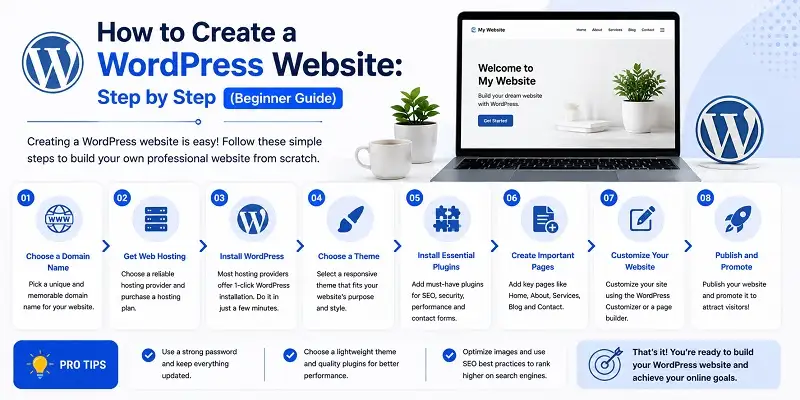
This checklist helps you set up your WordPress website.
A step-by-step procedure allows users to create their WordPress sites.
Step 1: Select Your Domain Name
Choose a name for your website that’s easy to remember and find online. Try to keep it tangible – stay away from using long names, numbers, or unusual symbols. Simple website names are easier to remember. They can also attract more visitors.
Step 2: Buy a reliable hosting plan
After picking your domain, the next step is to choose a good web hosting provider. Hosting stores all your website’s files and makes them accessible to visitors online. Choosing a hosting company is key. Look for strong security, great uptime, and fast performance. To speed up your WordPress site, focus on improving user experience. This is key.
Step 3: Installation of WordPress
Web host services have made installation very simple. You only need a couple of clicks to install WordPress on your own domain. When installed, login information will be provided for accessing your WordPress dashboard. Welcome to the hub of your website! Here you will do everything that is required.
Step 4: Logging into the WordPress Dashboard
The dashboard is like the brain of your website. It helps you publish content, install plugins, and more. Understanding how it works is key to managing your site effectively.
Step 5: Selection and Installation of a Theme
Your website design theme defines its appearance. This includes the fonts, layout, color scheme, and other elements. Obviously, there are more WordPress templates than you know what to do with. The selected template would have to be graphically appealing and quick in operation. The system should give users an interface that works well on all platforms and looks good.
Step 6: Modifying Website Appearance
You can customize your website with the theme installation process. It offers built-in design features like color schemes, fonts, and layout templates. These adjustments help strengthen your brand identity and create a more professional appearance. Free branding identity stationery mockups help you maintain a consistent brand style online. Also, create a clear navigation menu with organized labels. This helps visitors find the information they need easily.
Step 7: Install necessary plugins
The plugins offer more functionalities for your website. Install top plugins to keep your website fast and efficient. Popular plugins include SEO, security, and caching tools.
Step 8: Design Functional Pages
Your website needs key pages: Home, About, Contact, and Blog. These pages help attract visitors, build trust, and improve communication with your audience. A clear, easy-to-use structure can convert organic traffic into engaged readers, leads, or customers. Also, all pages need to be easy to navigate, understand, and test. This helps improve the user experience.
Step 9: Put Quality Content
Content is another core component of your website. Ensure your content provides value to readers. Make it engaging so they want to return and invest their time and energy. Use captions, images, and good formatting. This will help your message be clear and honest. Trendy content attracts more visitors. This happens as online ads lose their impact.
Step 10: Make your website search engine and mobile compatible
Make sure your website works well with major search engines like Google and Yahoo.
- Use key phrases.
- Choose faster loading examples.
- Make sure your website works on all devices.
Step 11: Test your website
Now is the time to examine your website thoroughly. If you want to find any system errors or bugs in it, try it. Check all the hyperlinks and pages on the website. This will help you see if they are working. Additionally, keep in mind how fast the website loads. Once you’re satisfied that a whole section seems okay, you can start using your website online.
Typical Errors to Steer Clear of
Selecting an Inappropriate Web Hosting Company
One of the major errors made by people new to web hosting is selecting inadequate web hosts. Bad website hosting can make your site load slowly, go offline, and become unsafe. This allows every user to enjoy and explore the engine ranking. It’s best to invest in a good website hosting provider. Look for one that offers solid performance, support, and scalability.
Use too many plugins
Using plugins can boost your website’s functionality. However, too many can slow it down. Adding more plugins increases the code your website processes. Some plugins might also conflict with each other. Platforms like Educationbeing.com: Learn – Lead & Excel show that reliable tools improve digital performance. Only install the plugins that are essential and work well for your website.
Poor content planning
The failure to plan before developing the content is yet another pitfall. Content must be high-quality and relevant. If it’s random or poor, people won’t visit the website anymore. Creating quality content that meets individual needs and boosts engagement should come first.
Advanced SEO Tips for Novices
SEO at the Outset
Improve your website and ensure that search engine marketing is complete. Use appropriate keywords and prepare content material effectively. The website will be available online soon.
Focus on Website Speed Optimization
Speed is a key ingredient to success. Use caching, compress snapshots, and choose a small theme to improve performance. Faster websites offer greater user satisfaction and are better for search results.
Update your website often
Updating your online website ensures protection and functionality. Update WordPress, themes, and plugins regularly. This helps kill pests, boost speed, and keep your website secure.
Performance and Passenger Behavior Tracking
With the help of analytical software, track the effectiveness of your website. Observe passenger behavior and tailgate and delivery flights. With this application, it becomes easier to understand what works and what doesn’t.
Benefits of Creating a WordPress Website
Easy to Use for Beginners
One of the biggest benefits of building a WordPress website is its simplicity. WordPress is a user-friendly platform. It helps beginners create and manage websites easily, without needing coding skills. The dashboard is easy to use. You can add pages, upload images, and publish content with a few clicks. This makes it an ideal platform for individuals and small groups.
Highly adaptable and flexible
WordPress offers many themes and plugins. These let you design your website to match your style. It allows you to design blogs, business websites, or even web-based storage sites. WordPress lets you upload functions and change layouts easily. You don’t need to redesign your website.
Affordable Solutions
WordPress sites cost less than other types. Most themes and plugins do not have to be charged, and the web hosting prices are reasonable. This method is a great option for newcomers wanting to start an online business on a budget.
Strong Community Support
WordPress has a huge worldwide community of creators and consumers. This strategy helps you find tutorials, articles, and solutions for your research needs. The community role supports your research activities and website development work.
Trends in Future WordPress Websites
A big trend for future WordPress sites is using artificial intelligence. It helps with many tasks, such as content creation, SEO, and website management.
Another major trend is the increasing importance of website speed and performance. Faster loading times and optimized formats are key. They ensure a smooth browsing experience and boost search engine rankings. Optimizing user experience on e-commerce sites is crucial. Slow pages can cause lost sales and unhappy customers. Mobile-first design is becoming crucial. More users now rely on smartphones to browse websites and shop online.
Block-based editing and full-grid page optimization make layout changes easy. Users can now design professional websites without knowing how to code. Modern WordPress features, like free business automation software, simplify workflows. They also boost efficiency by focusing on automation, performance, and user-friendliness. Improved security and easier tools help users manage websites and browse with less hassle.
Self-Hosted WordPress vs. All-in-One Builders
| Feature | WordPress (Self-Hosted) | Wix / Squarespace | Winner for SEO |
| Ownership | You own 100% of your data. | You are “renting” the platform. | WordPress |
| Customization | Unlimited (59,000+ Plugins). | Limited to built-in features. | WordPress |
| SEO Control | Deep technical SEO access. | Basic, automated SEO. | WordPress |
| Learning Curve | Moderate (Learning required). | Very Easy (Drag & Drop). | Wix/Squarespace |
| Scalability | High (From blog to Enterprise). | Low (Hard to move content later). | WordPress |
Frequently Asked Questions
Is WordPress still the best choice for websites in 2026?
Yes. WordPress manages more than 43% of the internet. WordPress remains the most flexible platform in 2026. It offers AI-powered content blocks and improved FSE capability. This combination boosts both SEO and usability.
How much does it realistically cost to start a WordPress site?
WordPress is free, but you need to buy hosting and a domain name. This usually costs about $10 to $15 each year. Hosting plans usually cost between $5 and $20 a month. This means most people can start a website for under $100 a year.
Do I need to know how to install Linux or use code?
No. All current hosts have “One-Click Installs.” WordPress runs on Linux servers, but the host manages all the technical details. The only thing you deal with is the easy-to-use WordPress dashboard.
What are the “must-have” plugins for a new site?
For a fast and secure website, it’s best to follow a “Lean” setup strategy. And, also this is For SEO, use Rank Math or Yoast. For protection, choose Wordfence. To boost speed and performance, go with WP Rocket or LiteSpeed Cache. Use smart WordPress security tips. For example, limit plugins to keep your site stable and safe. In most cases, it’s recommended not to use more than 15–20 plugins to avoid slowing down your site.
Can I change my WordPress theme later without losing my content?
Absolutely. Your content is kept in a database, separate from your website theme. This means that if you change themes, your posts and pages will stay safe. You might need to change menus, widgets, and homepage settings to fit the new design. Avoiding setup errors is key. It’s like avoiding tuning mistakes in SQL databases. Both can hurt performance and stability.
Conclusion
Learning to create a website with WordPress, step by step, makes it easy to build your online presence. WordPress has everything you need to build a professional website. You don’t need to know anything about web design.
Follow the guidelines in this guide to develop your website quickly. Choosing your niche and optimizing your website for search engines are key steps. Each stage is important for building your site successfully.
Website development is the first step. Sustainable growth needs regular updates, quality content, and constant improvements. Startups can achieve this with solid website content marketing strategies. You can create a WordPress website that matches your business goals. Use the right approach.